







If you are looking for a new edible ground cover to add to your landscape this Fall, you should consider Lingonberries. They are known by many names across their native range, including Mountain Cranberry, Cowberry, and Foxberry to name a few.
Jump to: Plant Information, Soil Requirements, Watering, Pollination, Production and Harvest, Popular Cultivars
Wild Child
The majority of Lingonberries are wild harvested, not cultivated. In fact, only about 71 acres worldwide are dedicated to lingonberry cultivation however, we imagine that number is increasing rapidly as more and more people discover this wonderful plant. They are extremely popular in Finland, where they are known as Puolukka and eaten whole in yogurt. This pairing has led Finland to become a large importer of the berries from other countries in Northern Europe.
Plant Information
The plants themselves are perennial, woody shrubs that grow only 12-16 inches high. They spread readily by underground rhizomes – up to 9 inches over the first few years! Tolerant of colder climates, they can survive down to -50ºF! Lingonberries will flower and produce fruit in more temperate growing regions, but they do need around 800 Chill Hours to produce fruit.

Soil Requirements
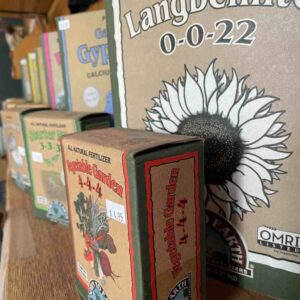
Like blueberries, lingonberries prefer well drained soils with 2-6% organic matter and pH 4.3-5.5. If your soil is not well draining, plant in 4-8” raised beds. Plant 8-18 inches apart and they will spread into a thick mat over time. Roots should be 2-3” deep, and 4-6” of organic mulch placed around the base of the plant and replenished every 3-6 years or as needed. Similar to blueberries, Lingonberries require around 20-40 lbs/acre of Ammonium Nitrogen annually. They are unable to take up the Nitrate form of Nitrogen, so be sure to check the nitrogen form on your fertilizer. In the Pacific Northwest, many growers fertilize in mid March and in late May. Do not over apply fertilizer to lingonberries or apply fertilizer after mid July. Excess Sodium, Chloride and Calcium can cause problems for Lingonberries.
Watering
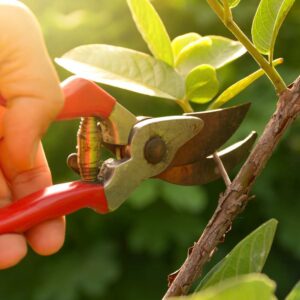
Lingonberries require very little water. They are best irrigated with driplines at a rate of 2.3-4.5 gallons of water per square yard weekly. Very easy to care for, lingonberries require no pruning for the first 4-5 years. It is best to mow alternate rows every 3-6 years to rejuvenate plants and keep yields high. They also have very few pest issues as their roots let out a chemical that keeps many weed seeds from germinating nearby.
Pollination
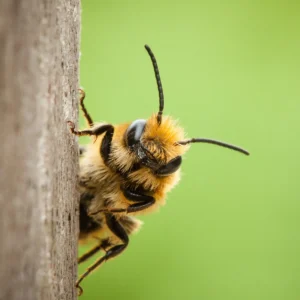
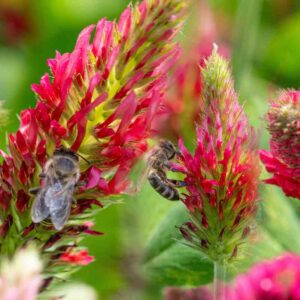
Lingonberries are pollinated by honey bees, flies, bumblebees, butterflies, beetles and other flying insects. They benefit from cross pollination. It is best to have one pollenizer out of every ten plants. Both our varieties Red Pearl and Koralle grow well together and will cross pollinate.
Production and Harvest
Lingonberries produce fruit on one year old wood. The berries are red, edible, and of various sizes. The plants flower and produce fruit twice per year: once in mid August and once in mid October. The October harvest boasts higher yields and larger berries. It is best to wait 1-2 weeks after the appearance of the first deep red berry to start harvesting. Underripe berries are very bitter, but will ripen further off the vine as long as they are fully red.
Harvest by hand or with a Swedish picking rake, which allows pickers to harvest 22-45 pounds per hour! Berries store well, lasting 6-8 weeks in the refrigerator or up to 2 years frozen. The berries are very high in flavonoids and phenolic acids, which play an important role in the control of cancers and other diseases. They contain four times the antioxidants of their cousin, the blueberry. They also contain arbutin, which is a medical compound helpful in combating many infections including UTI.
Popular Cultivars
Koralle Lingonberry
Developed in Germany and first released in Holland. It’s small, glossy, evergreen leaves take on a mahogany hue during the winter months. Near white to pink flowers bloom spring to fall, followed by bright red, edible berries. Originally developed as an ornamental ground cover, then later cultivated for it’s fruit. Now a popular Dutch cultivar making up almost all of European Production.
Red Pearl Lingonberry
Another Dutch cultivar, Red Pearl Lingonberry is a fast growing, wide, bushy, upright plant that gets to be about 13″ tall. Dark red, round fruit larger (1/3″ diameter) and more mildly flavored than Koralle. Most tolerant of less than ideal soil conditions.
Red Candy Lingonberry
An especially attractive and improved variety from Europe, Red Candy is early flowering, compact, and produces large yields of berries that hang on the shrub for a very long time. While you can eat it straight from the bush, it is more popular in pies, jams and other tasty treats.
Lingonberries are interesting plants that are very easy to care for. Take a look at those bare places in your garden and imagine a wonderful evergreen groundcover of Lingonberries and start scouring for good Scandinavian recipes!
Reach out to chat with us further about our selection of fruiting ground covers, or for more information about Lingonberries!
info@onegreenworld.com – (877) 353-4028