1-877-353-4028Call Us Today!

Honeyberry Planting Guide
July 27, 2021
OGW Growing Guides
Honeyberry (Lonicera caerulea), also known as Haskap Berries or Blue Honeysuckle.
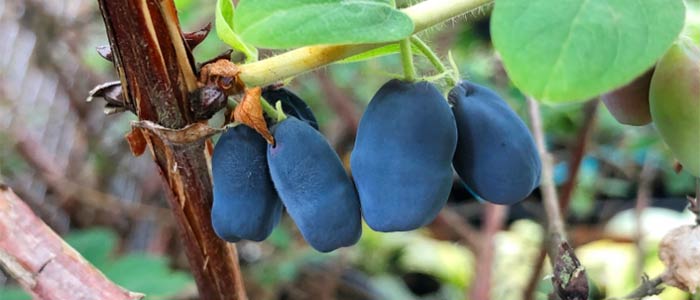
These shrubs have a high chill hour requirement and are best suited for cooler regions. They present beautiful white flowers in early spring followed by dark blue oblong berries. The berries take on the appearance of slightly stretched blueberries, however, they are more closely related to the Honeysuckle, within the Caprifoliaceae family and contain sweet-tart notes of huckleberry with a floral touch.
One of the first to ripen in spring, these are a wonderful early season treat. And even though they already have a long history of appreciation, these berries continue to be recognized for their benefits as a nutritional snack and for their value in the garden or permaculture guild.
Jump to: Site Selection, Site Preparation, Planting, Watering and Fertilizing, Pollination, Honeyberry Types
SITE SELECTION
Honeyberries prefer moderately fertile, well-drained soil with full to partial sun.
These shrubs can adapt to a wide range of soil types and are best planted in a pH between 5.5 – 7.5. While they prefer more loam or clay soil, they can still perform well in more sandy locations. They can grow in either full or partial sun, however the berries produce best in a north facing location or with some shade in a southern area. Two+ varieties are required for cross-pollination and to ensure successful berry production.
SITE PREPARATION
Your planting hole should be twice as wide and just as deep as the root ball.
When digging, loosen the topsoil and mix in any soil amendments. You can use this mixture to backfill the Honeyberry’s roots at planting.
Use a gardening fork to break up the sides of your planting hole if they have become smooth from the shovels edge. This helps encourage drainage and prevents eventual root bounding.
PLANTING
No need to soak potted honeyberry plants prior to planting! Instead, carefully remove your plant from it’s container, gently loosening the roots to encourage outward growth.
Place each plant in the center of the planting hole with its roots down and out. Backfill the hole, using your amended topsoil first. Working the soil carefully around the roots and tamp down gently as you fill the planting site.
Spread soil evenly around the plants and finish with a layer of mulch to assist with water retention and insulation.
WATERING & FERTILIZING
Water well after planting. A deep, slow soak of about 15 minutes will help set the plant, and encourage deep root growth. Water every 2-3 days for the first few weeks, then adjust as needed based on local rainfall, soil types, and temperatures.
We encourage all of our gardening friends to test their soil prior to applying any fertilizers! Honeyberries like a well-balanced fertilizer, so we recommend an organic, granular slow release. A 10-10-10 can be used during the growing season, but stop around July
POLLINATION
At least two varieties with similar bloom time are needed for cross-pollination. Plant within 30 feet for best pollination, and consider adding mason bees to your environment as early season helpers!
HONEYBERRY TYPES
Honeyberries are sorted into two houses: Early Blooming, and Late Blooming. Both require chill hours of zones 3-8. Some varieties begin blooming as soon as early March. Even though gardeners in colder locations may be wary of their earlier bloom times, the flowers of these plants are exceptionally hardy! They can easily survive and thrive in temperatures as low as 20° F!
Early Blooming
Early blooming honeyberries are ideal for regions with a shorter growing season, allowing for earlier harvests. They are often recommended for warmer zones, zones 6-9. This ensures they bloom in time for the spring season.
Late Blooming
These varieties are better suited for cooler climates and are recommended for zones 3-5, where early frost damage can occur. These varieties are also beneficial for regions east of the Cascade Mountains and other colder areas of the US. They bloom up to 2 months later than their early blooming counterparts.
Note: Either early blooming and late varieties will grow well in cooler locations. Late blooming varieties may be more suited for those in warmer areas, where early bloomers may break dormancy during a winter warm-up, and suffer from subsequent hard freezes.
Experience Honeyberries in your own garden by viewing our catalog HERE!
We appreciate the sweet-tart zest of Honeyberries in our garden in the early season. They make a tasty jam and are a lovely reminder of all the goodness to come.
If you have questions or want to share your favorite honeyberry, contact us! info@onegreenworld.com or leave us a voicemail at (877) 353-4028
2026©ONE GREEN WORLD. ALL RIGHTS RESERVED - PRIVACY NOTICE - CONDITIONS OF USE