Christmas Berry, also known as Toyon is a stunning and underused West Coast native that we adore for its evergreen foliage, profusions of white flowers and beautiful red berries that ripen around Christmas time.
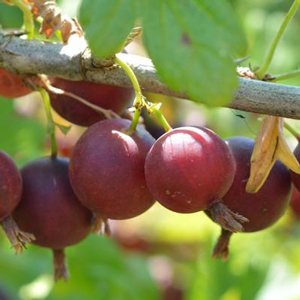
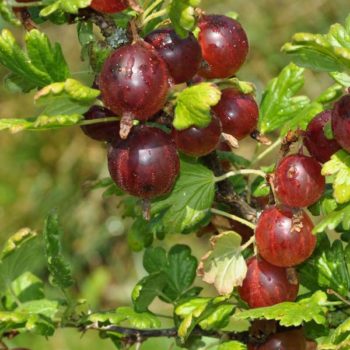
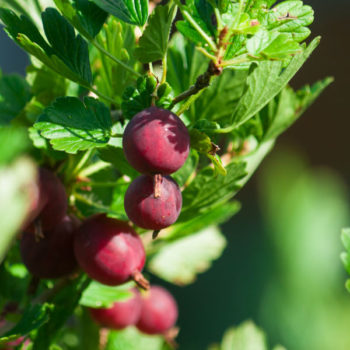
Orus 8 gooseberry is actually a hybrid between a black currant and a red gooseberry just like the famed jostabery, though the Orus 8 gooseberry looks much more like a gooseberry than a currant. Fruits from Orus 8 are deep purple and considered the best for fresh eating of any gooseberry. Orus 8 plants have some thorns but less than a typical gooseberry.
Originally from Canada, we discovered this unique variety at the National Germplasm Repository in Corvallis, Oregon. Thornless, disease-resistant and easy to grow, Shefford bears good crops of large golden yellow, sweet, crisp and tasty berries.
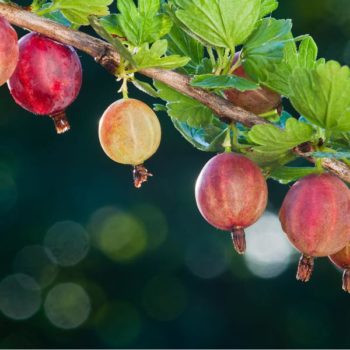
Sabine Pink Gooseberry have attractive berries that are pinkish and pear-shaped with great flavor. Bush habit is erect to somewhat spreading, and almost spineless.
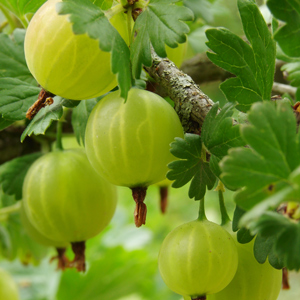
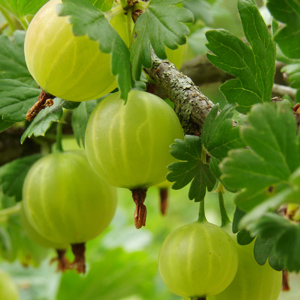
Invicta is a mildew resistant selection that produces a green to white berry with exceptionally sweet flavor. Fruit quality and high yields make this variety a great choice for any grower.
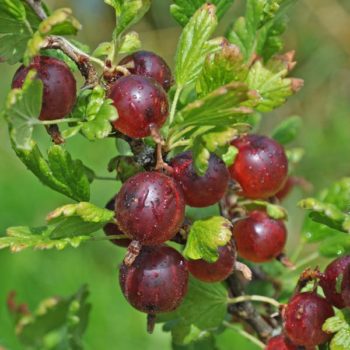
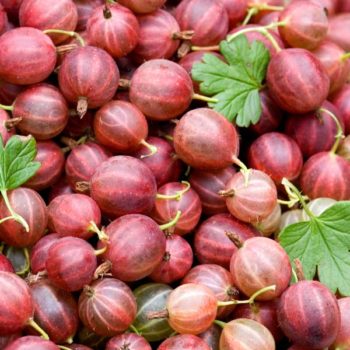
Jeanne Gooseberry is suitable for commercial production as well as home garden plantings. The deep maroon-red fruits are medium in size, averaging five grams.
Amish Gooseberry are highly vigorous with sturdy upright canes. The fruits are deep red with good flavor when they ripen in July. Yields are consistently high due to some resistance to powdery mildew and other fungi.
Pixwell Gooseberry produces small to medium, pink berries with excellent sweet/tart flavor on nearly thornless canes that can be eaten fresh or transformed into jellies and pies. Very cold hardy, these plants require very little maintenance after establishment.