
Good Golly, Goumis!
What are Goumi? Where do they come from?
Elaeagnus multiflora, more commonly known as Goumi, is a deciduous shrub with bell shaped, white flowers that produce red round small fruits speckled with golden freckles. You can tell they are ripe when they are no longer completely firm and no longer make your face pucker at the astringency! These mighty little fruits will suck the moisture out of your mouth when underripe, which makes them easy to tell when they are ready to harvest. Our Goumis grow best in USDA Zones 4-8, with half day to a full day sun and well draining soil. Goumi are resilient plants that typically adapt well to most soil conditions as well as a diverse pH range and withstanding occasional drought. The plant is considered a nitrogen fixer! Goumi are actinorhizal, meaning they have a symbiotic relationship with the bacteria Frankia, which fix atmospheric nitrogen, making it readily available for the plant to use. This plant has many useful benefits to offer in your garden and kitchen!
What do Goumi taste like and what health benefits might they have?
Goumis have a sweet tart flavor some compare to rhubarb or even a sweet, tangy baby tomato. They are typically about a centimeter long, while some more rare cultivars, like the much sought after Tillamook Goumi, can get up to about an inch in size! These fruits are known for their sweet-tart flavor caused by the astringent nature of the Goumi plant.
What recipes can they be used in and how can you store them?
Goumis aren’t as common as other fruits we find in super markets and so it is a little harder to find recipes online at places like One Green World! You can find our Goumis HERE. Goumis are thin skinned and delicate, making them difficult to transport. Goumis can be used in many ways, from jams and syrups to toppings on salad, pizza, scones. Their flavor is versatile and could be used in sweet or savory dishes. The options are endless. Goumis can be used within 5 days of harvesting or can be frozen to use at a later time, although this will affect the texture slightly. We would suggest using frozen Goumis within 6 months.
Savory Goumi and Herb Focaccia Recipe:
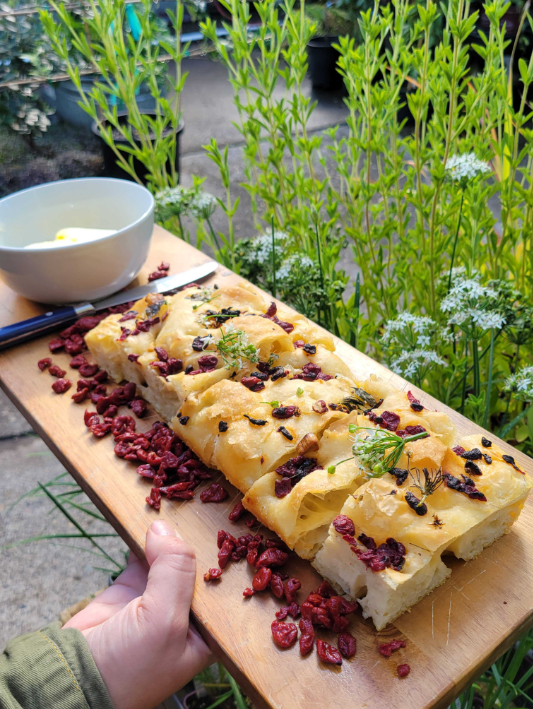
Oven Temperature: 400F
Bake Time: 20-22 minutes
Ingredients:
- 4 cups all purpose flour (12% protein flours is most ideal)
- 2 tsp salt
- 2 tsp yeast
- 2 cups warm water
- 1 tbsp olive oil, plus more for pan and topping
- ½ cup goumi berries, seeds removed and excess liquid pressed out
- Herbs, we like chives, thyme or basil!
Mix & First Rise:
Mix warm water, olive oil, salt and yeast and allow a few minutes for the yeast to activate and to get foamy. Next add the flour, and mix until combined. It will be very sticky. Once mixed, cover the bowl and let sit for 30 minutes to allow the gluten strands to develop.
Stretch & Fold:
With a small bowl of water, dip your clean hands in and grab one edge from under the dough, folding it over and stretching it to reach the opposite side. Continue this process about 4-5 times around the perimeter of the dough. Repeat this process of allowing the dough to rest 30 minutes and then stretch and fold 4 times with wet hands. The texture of the dough will change from sticky to smooth and elastic. This will take roughly 2 hours although most of the time is rest time. Refrigerate 18-48 hours to allow the dough to develop more flavor and gluten structure.
Rise and Dimple:
Remove the dough from the refrigerator and place in a well oiled pan, non-stick works best but we used glass. If you use glass, just be sure to grease the pan well. Allow to rise for two hours on the counter with a damp cloth over top. Once the dough has risen and 2 hours have passed, add your goumi berries and herbs (be sure to oil your toppings lightly so they don’t burn), oil the top of the focaccia as well as your hands and gently dimple the dough across the top. Dimple a second time but this time slightly jiggle your fingers while dimpling. This will cause the bread to appear more bubbly. This should give the focaccia more bubbles as well as distribute the toppings well.
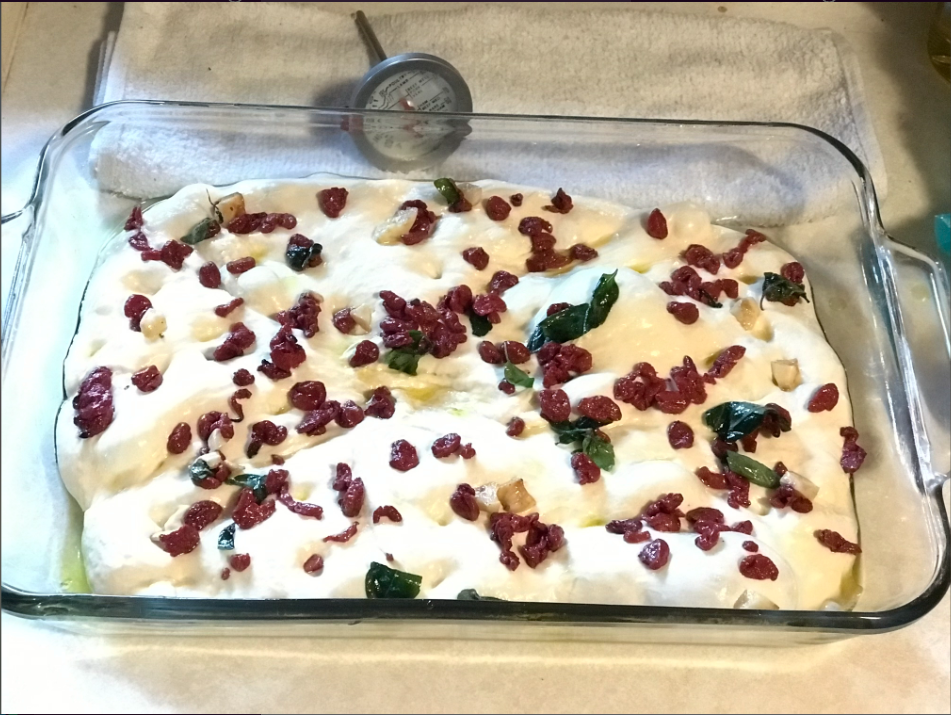
Bake & Enjoy:
Bake at 400F for 20-22 minutes. Allow the focaccia to cool before digging in. The outside should have a nice crust while the inside should be soft and fluffy, with lots of bubbles and flavor. We hope you love this recipe and break bread with your loved ones!
